Why a Bowling Alley Doesn't Need a Machine Chest Press (And What Columbia 300 Taught Me)
Here's my opinion after eight years of buying equipment for bowling centers: a bowling alley doesn't need to become a gym to survive, and trying to be a generalist at fitness can cost you thousands. It cost me about $5,400 in capital plus another $2,600 in installation and cleanup, all for a machine chest press and an elliptical that nobody actually used.
I'm an equipment buyer for a 32-lane bowling alley, and I've been handling bowling-center orders for eight years. I've personally made five significant purchasing mistakes, totaling roughly $18,000 in wasted budget. Now I maintain our team's pre-purchase checklist, and this story is the first line on it.
In September 2022, our ownership group wanted to turn an underused corner into a 'wellness corner.' The idea sounded practical: waiting league bowlers could warm up, parents could exercise while their kids played. I had about two weeks to make the call, so I did what most people do—I searched: is the elliptical a good workout? The answer seemed to be yes. Then I added a machine chest press for upper-body work and told myself we'd be offering cardio plus strength.
That was an overconfidence fail. I knew I should have asked our league captains and our insurance broker before spending the money, but I thought: what are the odds a wellness corner flops in a place where people already drive for entertainment? The odds caught up with me.
Three months later, the wellness corner looked great in our newsletter and terrible on our security cameras. The elliptical logged 11 documented uses in five months. The machine chest press collected a lost water bottle, a baseball cap, and about an inch of dust. Total bill: roughly $7,200 including rubber flooring and mirrors. That's about $654 per use before maintenance. (Note to self: equipment without coaching is decoration.)
Why I Now Believe in Expertise Boundaries
Don't read this as an anti-fitness rant. If you're running a gym, a machine chest press can be a legitimate tool for someone learning upper-body strength. An elliptical is a good workout for low-impact cardio when the user knows what they're doing and has a reason to stick with it. But I am not qualified to run that operation, and neither is a snack bar supervisor whose main job is fixing the ball return.
That's the lesson from my badly planned machine chest press. A bowling alley can add a lot of things, but every addition needs specialists who know how to run it well. If no one on staff can assess a customer's fitness level, you aren't offering fitness, you're offering access to equipment. That's the same reason I now apply the expertise rule to our pro shop.
Columbia 300 Showed Me What Specialized Actually Looks Like
While the elliptical sat idle, our pro shop budget came up for renewal. One of our resident ball drillers asked me to order Columbia 300. She didn't hand me a catalog. She gave me a strategy.
For first-time bowlers and juniors, she said, the Columbia 300 bowling ball WD (White Dot) is usually the better start. It's a durable polyester ball, and its predictable straight-line behavior lets a newcomer learn to aim and release. It doesn't try to be something it isn't.
For a league bowler who has started to develop hand rotation and wants to see a controlled hook, she pointed to the Columbia 300 The Beast bowling ball. That ball is a reactive option made to fit that next step. It isn't a magic scorer; no responsible vendor promises that. It just gives the bowler a shape that matches their growth.
That conversation made me realize something. The $7,200 fitness corner had no equivalent logic. I bought a machine chest press and an elliptical because they are generic pieces of gym equipment, not because I could explain why a bowler needed them. When the Columbia 300 rep explained the difference between the WD and The Beast, she also said, 'If you really want to open a gym, I can refer you to people who do that.' That sentence earned more trust than any discount.
We didn't take the referral. But I kept the advice.
Is the Elliptical a Good Workout? That Was the Wrong Question
If you only want a yes or no: yes, the elliptical can be a good workout. It raises your heart rate, it's lower-impact than running, and people can make real progress with it. But the better question for a bowling alley operator is: can you support that workout with trained staff and a real fitness plan? If not, then yes or no doesn't matter.
The same logic applies to the machine chest press. In a setting with qualified trainers and healthy gym culture, it has a place. Put one in an unstaffed bowling alley and you've created a potential liability with no accountable owner. Our general manager once suggested a sign that said 'burn calories while you wait.' I killed the idea before we had to prove the claim. Per FTC advertising guidelines (ftc.gov), specific health or fitness claims need solid substantiation, not a search engine answer.
I'm not saying bowlers can't use fitness. Plenty of our bowlers strength train and do cardio; some need it to stay on the lanes. But if someone asks me whether a machine chest press is part of a good bowling-specific routine, I refer them to a sports-medicine professional. That's outside my lane, and pretending otherwise is what got me in trouble.
The Objection: Don't You Need More Than Bowling?
I can already hear the counterargument: modern venues need experience diversification. A bowling alley that only offers bowling is leaving money on the table. I agree, sort of.
The issue isn't adding things to a bowling alley. It's adding things without adding the expertise. Arcades work when you know the games, the amusement tax requirements, and the tech support. Food service works when you hire a kitchen manager who understands food safety. Fitness would work if a bowling center hired qualified trainers and built an operational plan around them. What doesn't work is buying a machine chest press and assuming the equipment doubles as the strategy.
That's why I'd rather see more bowling centers invest in the sport they already know. New bowlers need good instruction, comfortable equipment, and a clear path from a Columbia 300 bowling ball WD to something like the Columbia 300 The Beast bowling ball if they start developing a hook. Those are bowling-specific decisions. They strengthen the core business.
Bottom Line
My final belief is stronger now than before the wellness corner disaster: specialization is not a weakness, it's a protection. A vendor who knows their limits and tells you what you don't need is more valuable than a supplier who sells a little of everything.
We removed the elliptical. We sold the machine chest press at a loss. In their place, we created a small fitting and coaching niche, stocked with Columbia 300 White Dot and Beast products, and we finally started answering the question bowlers actually ask: which ball is right for me? That's a question a bowling alley should be able to answer.
The machine chest press was a costly lesson. But it taught me that saying 'this isn't our strength' is not admitting defeat. It's how a specialist earns trust.
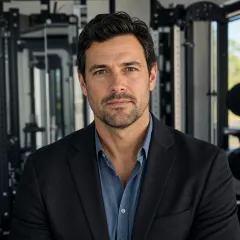
Marcus Feldman
Marcus Feldman is a commercial strength-equipment analyst covering selectorized machines, plate-loaded stations, Smith machines, functional trainers, power racks, benches, barbells, dumbbells, and cable systems. He applies ISO 20957-1 and ISO 20957-2 while comparing rated loads, stability, frame deflection, pulley ratios, cable travel, adjustment increments, guarding, entrapment points, fastener retention, and fatigue cycles. His guides help gym operators, coaches, facility planners, and procurement teams evaluate biomechanics, user capacity, floor layout, maintenance access, durability, and lifecycle value.